
The cryptocurrency industry in the United States has moved from experimental technology to mainstream financial infrastructure. Billions of dollars flow through crypto exchanges, DeFi platforms, and digital asset services daily. Traditional banks now custody Bitcoin. Major payment processors integrate crypto payments. Institutional investors allocate to digital assets.
This maturation has brought something else: regulatory scrutiny.
For crypto businesses and FinTech companies operating in this space, anti-money laundering (AML) compliance is no longer a “figure it out later” problem. It’s a foundational requirement that determines whether you can operate, access banking relationships, and build sustainable business models.
The regulatory framework governing crypto AML compliance USA is complex, evolving, and unforgiving. Enforcement actions demonstrate that federal authorities expect crypto businesses to meet the same AML standards as traditional financial institutions—sometimes higher.
This article breaks down what crypto AML compliance means in practice, which regulations apply, what specific requirements businesses must meet, and how to build compliance programs that satisfy regulators while enabling growth.
Understanding Crypto AML Compliance in the USA
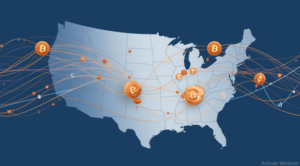
Crypto AML compliance USA refers to the regulatory obligations cryptocurrency businesses must fulfill to prevent money laundering, terrorist financing, and other financial crimes through digital asset services.
The core principle is straightforward: if your business transmits, exchanges, or holds virtual currency on behalf of others, you’re likely subject to federal and state AML regulations.
This applies to:
- Centralized cryptocurrency exchanges
- Wallet providers (custodial and some non-custodial)
- Crypto payment processors
- DeFi platforms with centralized control points
- NFT marketplaces facilitating transactions
- Crypto ATM operators
- Stablecoin issuers
What AML Crypto Regulations Aim to Prevent

Money laundering through cryptocurrency isn’t theoretical. Criminals exploit crypto’s speed, global accessibility, and perceived anonymity to:
- Convert proceeds from drug trafficking, ransomware, and fraud into digital assets
- Move illicit funds across borders without traditional banking oversight
- Evade sanctions by transacting with prohibited persons or jurisdictions
- Finance terrorism through pseudonymous crypto transfers
- Facilitate tax evasion and asset concealment
AML crypto regulations exist to detect, deter, and disrupt these activities. The regulations work by imposing transparency requirements on businesses that serve as on-ramps and off-ramps between fiat currency and cryptocurrency.
Regulatory Landscape Governing Crypto in the United States

Federal Authority: FinCEN and the Bank Secrecy Act
The Financial Crimes Enforcement Network (FinCEN) serves as the primary federal regulator for crypto AML compliance. Since 2013, FinCEN has made clear that certain cryptocurrency businesses qualify as Money Services Businesses (MSBs) under the Bank Secrecy Act.
Specifically, businesses that act as “exchangers” or “administrators” of virtual currency must register with FinCEN, implement AML programs, and comply with reporting obligations.
The Bank Secrecy Act—the foundational U.S. AML law enacted in 1970—now extends to cryptocurrency businesses exactly as it does to check cashers, money transmitters, and currency exchangers.
State-Level Money Transmitter Licensing
Federal registration isn’t enough. Most U.S. states require separate money transmitter licenses for crypto businesses operating within their jurisdictions.
State licensing processes typically take 9-18 months and cost $500,000 to $1.5 million for comprehensive nationwide coverage. State regulators review AML program adequacy during licensing and conduct ongoing examinations.
Other Federal Agencies
While FinCEN handles AML, other agencies assert jurisdiction over different aspects of crypto operations:
- SEC – Securities laws apply to crypto assets classified as securities
- CFTC – Commodity regulations for crypto derivatives and certain spot markets
- OFAC – Sanctions compliance for all transactions, including crypto
- IRS – Tax reporting and information sharing
Each agency brings different compliance obligations. A comprehensive crypto compliance program addresses all applicable requirements.
Key AML Requirements for Crypto Businesses

Customer Identification and Due Diligence (KYC/KYB)
Crypto AML compliance USA begins with knowing your customer. Before allowing anyone to use your platform, you must:
For individuals:
- Collect full legal name, date of birth, physical address
- Verify identity using government-issued ID
- Implement biometric verification (increasingly expected)
- Screen against sanctions lists and adverse media
- Conduct risk-based assessment
For business customers:
- Verify legal entity formation and registration
- Identify beneficial owners (individuals with 25%+ ownership)
- Understand business purpose and expected activity
- Conduct enhanced due diligence based on risk
The standard isn’t “verify if it seems suspicious.” It’s verify everyone, every time, with documentation retained for at least five years.
Transaction Monitoring and Blockchain Analytics
Crypto presents unique monitoring challenges. Unlike traditional banking where you see all transaction details, crypto businesses must:
- Monitor both on-chain (blockchain) and off-chain (platform) activity
- Track fund flows through multiple wallet addresses and intermediaries
- Identify high-risk wallet addresses associated with darknet markets, ransomware, or sanctioned entities
- Detect structuring, rapid movements, and patterns inconsistent with customer profiles
Technology is non-negotiable. Blockchain analytics platforms like Chainalysis, Elliptic, and TRM Labs have become infrastructure-level requirements for crypto businesses.
These tools trace crypto flows, identify risky counterparties, and generate alerts when transactions involve concerning addresses or patterns.
Sanctions and PEP Screening
OFAC sanctions compliance applies fully to cryptocurrency. Crypto businesses must:
- Screen all customers against OFAC’s Specially Designated Nationals (SDN) list
- Block transactions with sanctioned wallet addresses
- Prevent access from comprehensively sanctioned jurisdictions
- Identify and apply enhanced due diligence to Politically Exposed Persons (PEPs)
Sanctions violations carry severe penalties. OFAC has imposed multimillion-dollar fines on crypto platforms that failed to prevent sanctioned parties from transacting.
Screening must occur at onboarding and continuously throughout the customer relationship, as OFAC updates sanctions lists regularly.
Suspicious Activity Reporting (SARs)
When transaction monitoring, investigations, or other sources identify potentially illicit activity, crypto businesses must file Suspicious Activity Reports with FinCEN.
SARs must be filed within 30 days of detecting red flags. Common triggers in crypto include:
- Transactions involving mixer/tumbler services
- Fund movements through privacy coins (Monero, Zcash)
- Activity patterns inconsistent with stated business purpose
- Connections to darknet marketplace addresses
- Rapid deposits followed by immediate withdrawals
- Unusually complex transaction routing
The SAR regime isn’t optional. It’s a federal requirement with criminal penalties for willful failure to file.
Record-Keeping and Reporting
Comprehensive documentation is mandatory:
- Customer identification and verification records (5 years)
- Transaction records with blockchain hashes and wallet addresses (5 years)
- SAR filing decisions and supporting analysis (5 years)
- Risk assessments and compliance program documentation (ongoing)
- Currency Transaction Reports (CTRs) for cash transactions exceeding $10,000
During regulatory examinations, inability to produce required records is itself a violation that triggers enforcement.
Why Crypto AML Compliance Matters for FinTech and Crypto Companies
Regulatory Expectations Are Non-Negotiable
FinCEN and state regulators have made enforcement a priority. Recent years have seen:
- Crypto exchanges fined hundreds of millions for AML failures
- Executives criminally prosecuted for willful BSA violations
- Platforms forced to shut down operations entirely
- Companies placed on OFAC sanctions lists for facilitating illicit finance
The message is clear: crypto businesses face the same AML standards as banks, with less tolerance for “we’re still figuring it out” explanations.
Financial Crime Risk Is Real and Measurable
Cryptocurrency facilitates billions in illicit transactions annually. Chain analysis estimates illicit crypto activity exceeded $20 billion in recent years, involving:
- Ransomware payments
- Darknet marketplace transactions
- Sanctions evasion
- Fraud and scam proceeds
- Money laundering operations
Operating without robust AML controls means your platform likely handles illicit funds, exposing you to enforcement, civil liability, and reputational damage.
Banking Access Depends on Compliance
Traditional banks conduct extensive due diligence before providing accounts to crypto businesses. They require:
- Evidence of FinCEN registration and state licenses
- Comprehensive AML program documentation
- Transaction monitoring system descriptions
- Blockchain analytics tool implementation
- Independent audit results
Weak AML compliance means no banking access. No banking access means you cannot operate.
Investor and Partner Confidence
Sophisticated investors performing due diligence scrutinize AML compliance closely. Venture capital, private equity, and strategic partners view compliance failures as red flags indicating:
- Management inexperience or recklessness
- Unquantified legal and regulatory risk
- Potential hidden liabilities
- Cultural problems that affect overall business quality
Strong crypto AML compliance signals operational maturity and long-term viability.
Common AML Challenges in the Crypto Sector

Cross-Border Complexity
Cryptocurrency’s borderless nature creates jurisdictional complexity. A single transaction might involve:
- A customer in California
- An exchange incorporated in Delaware
- Servers hosted in Ireland
- Liquidity providers in Singapore
- Blockchain validators globally
Which country’s AML rules apply? In practice, all of them. Crypto businesses must navigate overlapping U.S. federal, state, and international requirements simultaneously.
Pseudonymity and Technology Challenges
Blockchain addresses aren’t inherently tied to real-world identities. Customers control multiple wallets. They interact with DeFi protocols, mixers, and cross-chain bridges that obscure fund flows.
Traditional AML relies on identifying parties to transactions. Crypto requires reconstructing real-world identity from blockchain pseudonyms through forensic analysis—technically complex and resource-intensive.
Rapidly Evolving Crypto Regulations
Crypto regulations are nowhere near settled. FinCEN continues issuing new guidance. States propose additional requirements. International standards bodies like FATF issue recommendations that U.S. regulators incorporate.
Recent developments include proposed rules on:
- “Un hosted” wallet transaction reporting
- Enhanced travel rule requirements for cross-border transfers
- Expanded broker definitions for tax reporting
- DeFi protocol regulatory treatment
Building compliant systems requires anticipating regulatory direction, not just meeting current minimums.
Best Practices for Meeting Crypto AML Compliance Expectations
Build Risk-Based AML Frameworks
One-size-fits-all compliance doesn’t work. Effective programs tailor controls to actual risk:
- Conduct enterprise-wide risk assessments covering products, customers, geographies, and delivery channels
- Apply enhanced due diligence to high-risk customers, jurisdictions, and transaction types
- Allocate monitoring resources where money laundering risk is greatest
- Document risk decisions with clear methodology
Risk-based compliance satisfies regulators while optimizing resource allocation.
Invest in Compliance Technology
Manual crypto AML compliance is impossible at scale. Required technology includes:
- Identity verification platforms – Automated ID validation, biometrics, liveness detection
- Blockchain analytics – Transaction tracing, address screening, risk scoring
- Transaction monitoring systems – Real-time alerts, behavioral analytics, case management
- Sanctions screening tools – Continuous monitoring against global sanctions lists
Technology enables effective compliance while containing costs. The alternative—large manual compliance teams—doesn’t scale and misses sophisticated risks.
Establish Strong Governance and Oversight
Compliance requires leadership accountability:
- Designate a qualified Chief Compliance Officer with appropriate authority
- Ensure board-level oversight of AML program effectiveness
- Conduct independent testing annually through qualified auditors
- Implement compliance training for all employees
- Create clear escalation paths for compliance concerns
Governance failures are the root cause of most major compliance breakdowns. Strong governance prevents small issues from becoming existential crises.
Maintain Ongoing Monitoring and Adaptation
Crypto AML compliance isn’t static. Establish:
- Continuous customer screening as sanctions lists update
- Periodic review of customer due diligence (risk-based frequency)
- Regular risk assessment updates as business evolves
- Monitoring system rule tuning to reduce false positives
- Compliance program testing before regulatory examinations
The difference between compliant and non-compliant often comes down to ongoing maintenance, not initial program design.
Practical Compliance Scenarios

Scenario 1: The Privacy Coin Mixer
A customer deposits Bitcoin, converts it to Monero (a privacy coin), then converts back to Bitcoin before withdrawing. This “chain hopping” raises immediate red flags. Compliance teams investigate the business purpose. If the customer cannot provide legitimate explanation, the transaction is blocked, the customer relationship is terminated, and a SAR is filed. Blockchain analytics confirms whether the funds trace to illicit sources.
Scenario 2: Sanctions Screening Hit
During onboarding, a new customer’s wallet address matches a known North Korean hacking group address in the blockchain analytics database. The account application is immediately rejected. The compliance team files a SAR and reports the attempted registration to OFAC. The customer never gains platform access.
Scenario 3: High-Velocity Trading Bot
Transaction monitoring flags a customer making hundreds of trades daily with large volumes inconsistent with their profile. Investigation reveals legitimate algorithmic trading activity. Enhanced due diligence verifies the source of funds, confirms the customer’s trading strategy, and places the account under elevated monitoring. Activity continues with additional oversight.
These scenarios illustrate how crypto AML compliance combines automated detection, human investigation, and appropriate action.
Building Sustainable Crypto Operations
Crypto AML compliance in the United States has evolved from regulatory uncertainty to well-defined obligations with serious enforcement. For cryptocurrency businesses and FinTech companies integrating digital assets, robust compliance programs are business fundamentals, not optional enhancements.
The regulatory environment will continue evolving as technology advances and regulators respond to emerging risks. Staying compliant requires ongoing investment in technology, expertise, processes, and governance that adapt to changing requirements.
Successful crypto businesses recognize that compliance creates competitive advantage. Strong AML controls build trust with customers, banking partners, investors, and regulators. They enable sustainable growth in an industry where many competitors fail due to compliance deficiencies.
The companies that thrive long-term are those that embed compliance into their DNA from inception, treating it as foundational infrastructure rather than regulatory burden.
FinCheck helps cryptocurrency businesses and FinTech companies navigate crypto AML compliance USA requirements. Our experienced compliance team provides AML program design, regulatory guidance, technology implementation support, and ongoing advisory services that enable compliant growth in the digital asset sector. Contact us to discuss how we can support your compliance journey.