
If you’re building a fintech company, launching a crypto exchange, or operating a payment processing platform in the United States, FinCEN MSB registration is not optional, it is a foundational federal requirement. And yet, it remains one of the most misunderstood obligations in the regulatory landscape.
Many founders and compliance teams treat MSB registration as a checkbox. They complete the filing, assume they’re covered, and move on. This approach creates serious exposure. FinCEN MSB registration is the starting line of your compliance journey — not the finish.
This guide walks you through exactly what MSB registration means, who needs it, how to complete the process, and what comes next. If you’re entering the U.S. market, this is where compliance begins.
What Is FinCEN MSB Registration?

The Financial Crimes Enforcement Network (FinCEN) is a bureau of the U.S. Department of the Treasury. It is responsible for safeguarding the financial system against illicit use, money laundering, and terrorist financing.
Under the Bank Secrecy Act (BSA), certain financial businesses are classified as Money Services Businesses (MSBs) and must register directly with FinCEN. This registration is a federal requirement — not a state license, and not a substitute for one.
What Types of Businesses Qualify as MSBs?
FinCEN defines an MSB as any person doing business in one or more of the following capacities:
- Money transmitters — businesses that transfer funds on behalf of customers
- Check cashers — entities that cash checks or other monetary instruments
- Currency dealers or exchangers — businesses that exchange one currency for another, including cryptocurrency
- Issuers, sellers, or redeemers of money orders or traveler’s checks
- Prepaid access providers — companies offering stored-value products or prepaid cards
- U.S. Postal Service (specifically for its money order and similar services)
If your business falls into any of these categories — and many modern fintech and crypto companies do — FinCEN MSB registration is mandatory.
Who Needs to Register?

The MSB registration requirement casts a wide net. Businesses that frequently find themselves subject to it include:
- Cryptocurrency exchanges and trading platforms that convert digital assets to fiat currency or facilitate peer-to-peer transfers
- Payment processors and payment facilitators handling fund transfers on behalf of merchants or consumers
- Remittance and cross-border payment companies transmitting money internationally
- Neobanks and fintech startups offering wallet-based money transmission
- Prepaid card issuers and stored-value platform providers
Who Is Exempt?
Not every financial business qualifies as an MSB. Banks, credit unions, and broker-dealers regulated under other federal frameworks are generally excluded. Additionally, agents of MSBs — entities that operate on behalf of a registered MSB under a formal agreement — are not required to register independently at the federal level, though state rules may differ. If there is any ambiguity about your classification, a formal legal or compliance review is strongly advisable before proceeding.
The MSB Registration Process: Step by Step
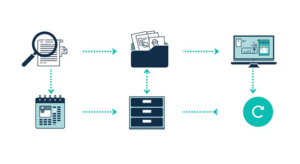
The FinCEN MSB registration process is straightforward when properly prepared. Here is what it involves.
Step 1: Determine Your MSB Status
Before filing anything, confirm whether your business actually meets the definition of an MSB under FinCEN’s regulations. Review your services, transaction types, customer relationships, and operational model against the categories outlined in 31 CFR § 1010.100. If your business transmits funds, exchanges currency, or issues value-based instruments, registration is almost certainly required.
Step 2: Gather Your Business Information
FinCEN requires specific information to complete registration. Prepare the following in advance:
- Legal business name and all trade names (DBAs)
- Employer Identification Number (EIN)
- Principal place of business address
- List of MSB activities your business performs
- Information on owners with 25% or more ownership
- Contact details for the designated compliance officer
Step 3: File FinCEN Form 107 via the BSA E-Filing System
FinCEN MSB registration is completed by submitting FinCEN Form 107 — Registration of Money Services Business through the BSA E-Filing System at bsaefiling.fincen.treas.gov. The system is web-based and does not require paper submissions. You will need to create a BSA E-Filing account if your organization does not already have one.
Step 4: Submit Within 180 Days of Starting Operations
Timing matters. Under the Bank Secrecy Act, a new MSB must register with FinCEN within 180 days of the date it first begins operating as an MSB. Waiting until operations are fully scaled is not a compliant approach. File as soon as your MSB activities commence.
Step 5: Maintain Records and Documentation
Upon registration, you are required to retain a copy of your completed FinCEN Form 107 and make it available to FinCEN and law enforcement upon request. Your registration records must be kept for a minimum of five years and accessible at your principal place of business.
Step 6: Renew Registration Every Two Years
FinCEN MSB registration is not a one-time event. Registration must be renewed every two years — specifically, by December 31 of each even-numbered year. Missing the renewal deadline is a compliance violation and can create significant regulatory and banking access issues.
Important: There is no filing fee for FinCEN MSB registration. The cost is compliance infrastructure, not administrative fees.
Key Compliance Requirements After Registration

Completing your FinCEN MSB registration establishes your regulatory identity. But it does not mean you are operationally compliant. The BSA imposes a series of ongoing obligations that registered MSBs must meet.
- AML Program: You must implement and maintain a written Anti-Money Laundering program tailored to your specific business model. The program must address policies, procedures, internal controls, and training.
- Customer Due Diligence (CDD) / Know Your Customer (KYC): MSBs must verify the identity of customers, understand the nature of their transactions, and assess risk at the point of onboarding.
- Transaction Monitoring: You are required to monitor transactions for suspicious patterns, structuring, or activity that deviates from expected behavior.
- Suspicious Activity Reports (SARs): When suspicious activity is identified, MSBs must file a SAR with FinCEN within 30 days of detection.
- Recordkeeping: Specific transaction records — particularly those involving $3,000 or more — must be retained for five years in accessible form.
Common Mistakes to Avoid

The MSB registration process may be straightforward, but the compliance environment around it is not. The following mistakes are common and costly.
Treating registration as a license. FinCEN registration is a federal reporting requirement. It does not authorize you to conduct money transmission in any U.S. state. You must separately obtain Money Transmitter Licenses (MTLs) in each state where you operate — a process that is significantly more complex and time-intensive.
Ignoring state-level requirements. Most U.S. states require a separate MTL before you can legally transmit money within their jurisdiction. Some states, such as New York with its Bit License, have additional cryptocurrency-specific frameworks.
Underbuilding your AML program. A weak or template-based AML program is one of the most frequent findings in FinCEN enforcement actions. Programs must be risk-based, documented, tested, and updated regularly.
Poor recordkeeping practices. Inadequate records are a compliance failure on their own, separate from the underlying activity they were meant to document.
Timeline and Cost Expectations
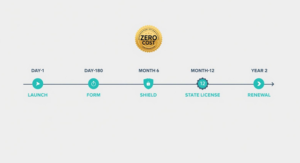
For a company that has prepared its information in advance, the actual FinCEN Form 107 submission takes less than a day. FinCEN does not charge a filing fee.
However, the broader compliance setup — AML program development, KYC implementation, transaction monitoring systems, and SAR workflows — typically requires several weeks to several months depending on your operational complexity. Plan for this timeline before launching, not after.
State MTL applications operate on entirely separate timelines, often six to eighteen months per state, and involve significantly more documentation, surety bonds, and capital requirements.
A Practical Example

Consider a fintech startup launching a cross-border remittance application for the U.S.-to-Mexico corridor. From the moment the first customer transfer is processed, the company is operating as a money transmitter — an MSB under FinCEN’s definitions.
The founding team registers with FinCEN via Form 107 within the first 60 days of launch. Simultaneously, they engage a compliance consultant to develop a risk-based AML program, implement KYC onboarding flows, and configure transaction monitoring alerts. They apply for MTLs in the states where their initial customer base is concentrated.
By month six, the company has a defensible compliance posture: federal registration confirmed, a functioning AML program in place, and state licensing in progress. Banking partners — critical to any money transmission business — review the compliance framework as part of their own due diligence. The documentation is ready.
This sequencing — registration, then compliance infrastructure, then banking and scale — is the path to sustainable growth.
Why FinCEN MSB Registration Matters for Business Growth

Compliance is not a constraint on growth. For MSBs, it is an enabler.
Banking access. Financial institutions conduct rigorous due diligence on MSB clients. A valid FinCEN registration, supported by a credible AML program, is the baseline expectation. Companies that lack it face account denials and debanking.
Regulatory credibility. Regulators, auditors, and examiners evaluate compliance posture as a proxy for operational maturity. A well-documented compliance framework demonstrates that your team understands its obligations.
Investor confidence. Institutional investors and strategic partners increasingly conduct compliance due diligence as part of their investment process. Registration and compliance documentation reduce perceived regulatory risk.
Market entry. For foreign companies entering the U.S. market, FinCEN MSB registration is a prerequisite — not just a regulatory obligation. It signals serious intent and sets the foundation for longer-term licensing.
Conclusion

FinCEN MSB registration is the starting point for any compliant money services business operating in the United States. The process itself is accessible. The compliance obligations that follow require real infrastructure, expertise, and ongoing commitment.
The most common mistakes — confusing registration with licensing, underestimating state requirements, and building inadequate AML programs — are avoidable with the right guidance.
At FinCheck, we work with fintech companies, crypto platforms, and payment businesses at every stage of their compliance journey — from initial MSB registration through AML program development, state licensing strategy, and ongoing regulatory support.
If you’re preparing to register as an MSB or need to strengthen your compliance framework, contact @finCheckllc.com or Telegram@fincheckllc. We’ll help you get it right from the start.